






The Windham Solid Waste Management District in Brattleboro, VT had hit capacity. The facility, responsible for processing compost from more than a dozen municipalities, had simply run out of space. That meant increasing capacity—which necessitated a larger-scale state permit—while still operating on its same footprint.
It turned to Agrilab Technologies, a Greentown Labs startup whose technology for compost aeration and heat recovery (CAHR) saves composters time, money, and space—all while cutting down on greenhouse gas emissions.
Today, most composters—including Windham Solid Waste—use turned windrow composting, where long piles sit for weeks or months as the materials break down. Aeration is key to the composting process, so the piles have to be turned upward of a dozen times, typically by diesel-powered machinery.
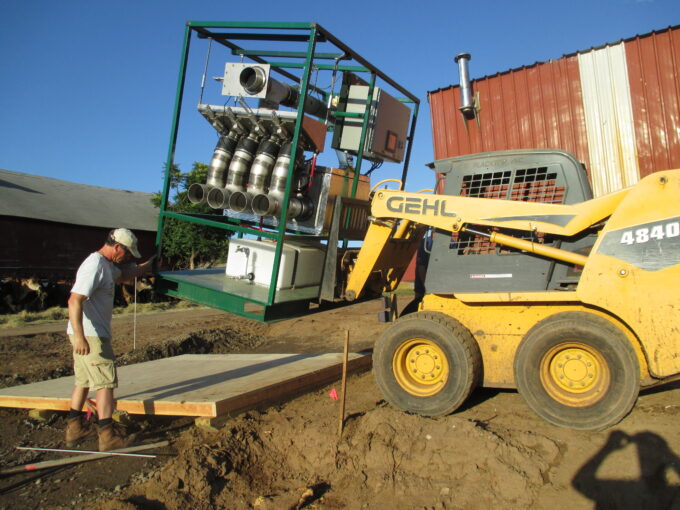
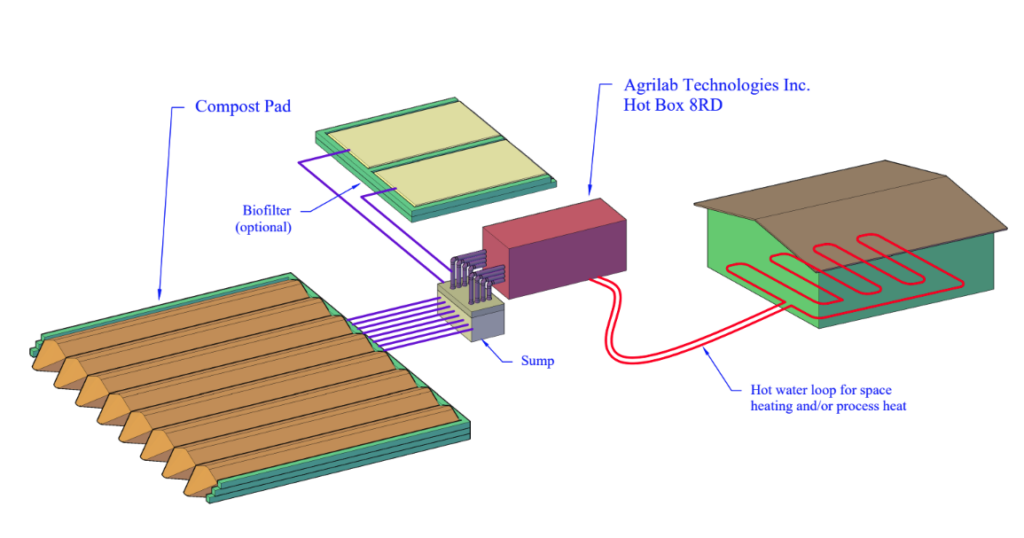
Agrilab Technologies’s tech cuts the active composting time in half. It also reduces the number of pile turns to around five, and its compact, modular systems can generate renewable thermal energy from the composting process. Agrilab Technologies systems have aeration pipes running beneath the windrows and utilize negative aeration (essentially suction), which means the startup can also manage odor coming off the piles by directing exhaust into a wood-chip biofilter.
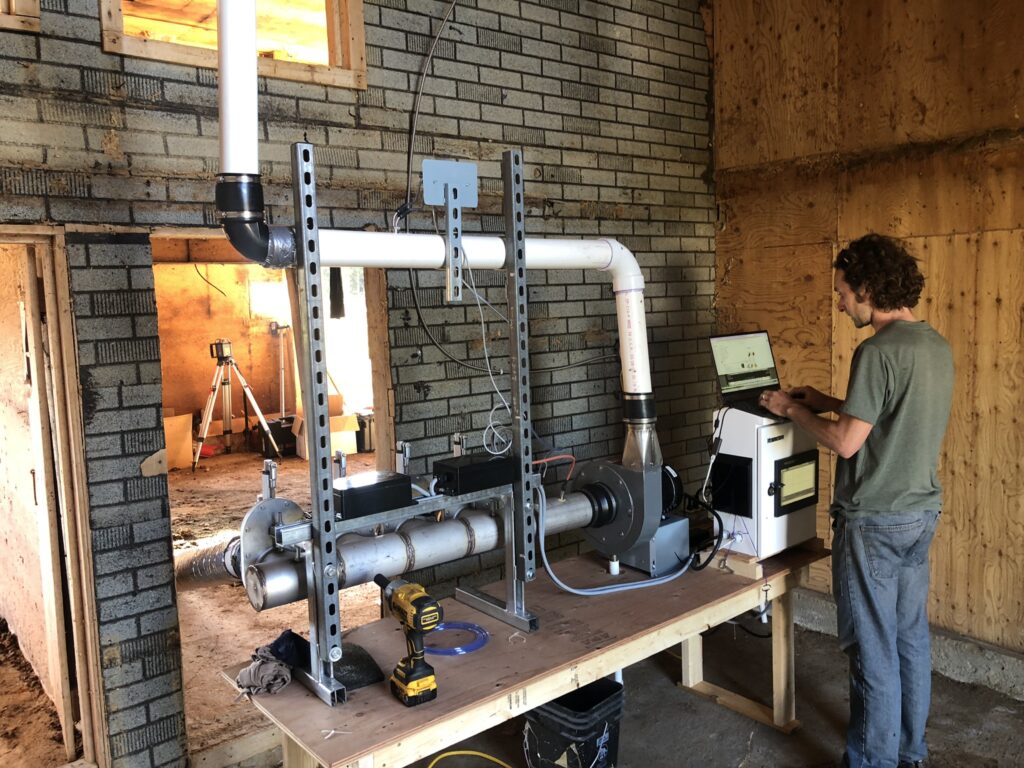
Moving compost through the process faster with more data and control means the compost material doesn’t have to sit as long, enabling facilities to cycle through more material. This more efficient processing reduces energy and labor costs for operators, leading to “tens of thousands in savings per year,” according to Agrilab Technologies’s President and Co-founder Brian Jerose.
Heat recovery is key to what sets Agrilab Technologies apart. The startup captures the thermal energy naturally generated by the composting process, then uses it to accelerate composting (especially in winter) or heat nearby buildings, including work rooms or greenhouses—saving even more money and emissions.
“Composting operations are equipment-, space-, energy-, and labor-intensive, so we’re all about efficient composting and renewable energy,” Jerose says. “That’s what makes us unique.”
Agrilab Technologies customers include private commercial composters, municipal facilities, and farms. For this range of customers, the team also offers technical services and consulting to help throughout planning, design, implementation, and ongoing operations.
The company is headquartered in northern Vermont and manufactures its equipment in Cambridge, VT. Agrilab Technologies is about to deploy its 29th system, and this year marks the 10-year anniversary of its first modular installation. Last year, it installed systems in Massachusetts, Vermont, New York, Ontario, and Quebec—notably, all cold-weather climates where heating expenses add up. It also introduced the AGT Mini-System series to meet a wider range of customer needs.
While the startup is operating off of revenue, it plans to fundraise in 2026 to increase capacity and meet growing demand. That demand has already lined up several new installations, including commercial projects in Ohio and Michigan and a large greenhouse project in Canada. Agrilab Technologies will also conduct R&D to explore adding complementary technologies—such as heat pumps and carbon capture—into its products.
The five-person team joined Greentown’s Somerville incubator in early 2024 with the goal of immersing themselves in the climatetech ecosystem. They recently made a key hire for engineering and sales, Andrew Horowitz (a longtime member of the Greentown network) through Greentown’s EnergyBar networking event.
“That’s the kind of synergy—to use that hated word—that Greentown offers,” says Spencer Taylor, the company’s head of sales and marketing.
“There’s no way we would have found him otherwise,” Jerose adds.
Taylor, a serial entrepreneur who’s been building companies in the Boston area since 2011—the same year Greentown was founded—says he became familiar with the incubator in its early days.
“The people I meet at Greentown have a shared passion for working in double-bottom-line businesses,” he says. “Through that, there’s a lot of give and take between the members, because we all have something in common—so I find that really rewarding. On a very personal level, it’s fantastic that it’s a resource in Somerville. I live in Somerville, I love it here, and it’s a wonderful thing to have in our local community.”